
Does Practice Make Perfect? How Dance Curriculum Improves Technique (and How to Practice at Home)
Whether you’re a dancer, dance parent, or aerial student, smart practice matters. Here’s how curriculum-based training builds technique, artistry, and safer progress—plus the best way to practice at home without creating bad habits.
I remember growing up dancing and feeling that post-holiday itch—Nutcracker season wrapped, the sparkle still fresh, and all I wanted was to be back in the dance studio. I was always a little anxious in the best way… like, okay—this is my year.
And honestly? That feeling doesn’t go away as an adult. It’s the end of January, we’re already back into classes, and I’m seeing the same thing I felt as a kid: a new-year reset. New focus. New goals.
You know the list:
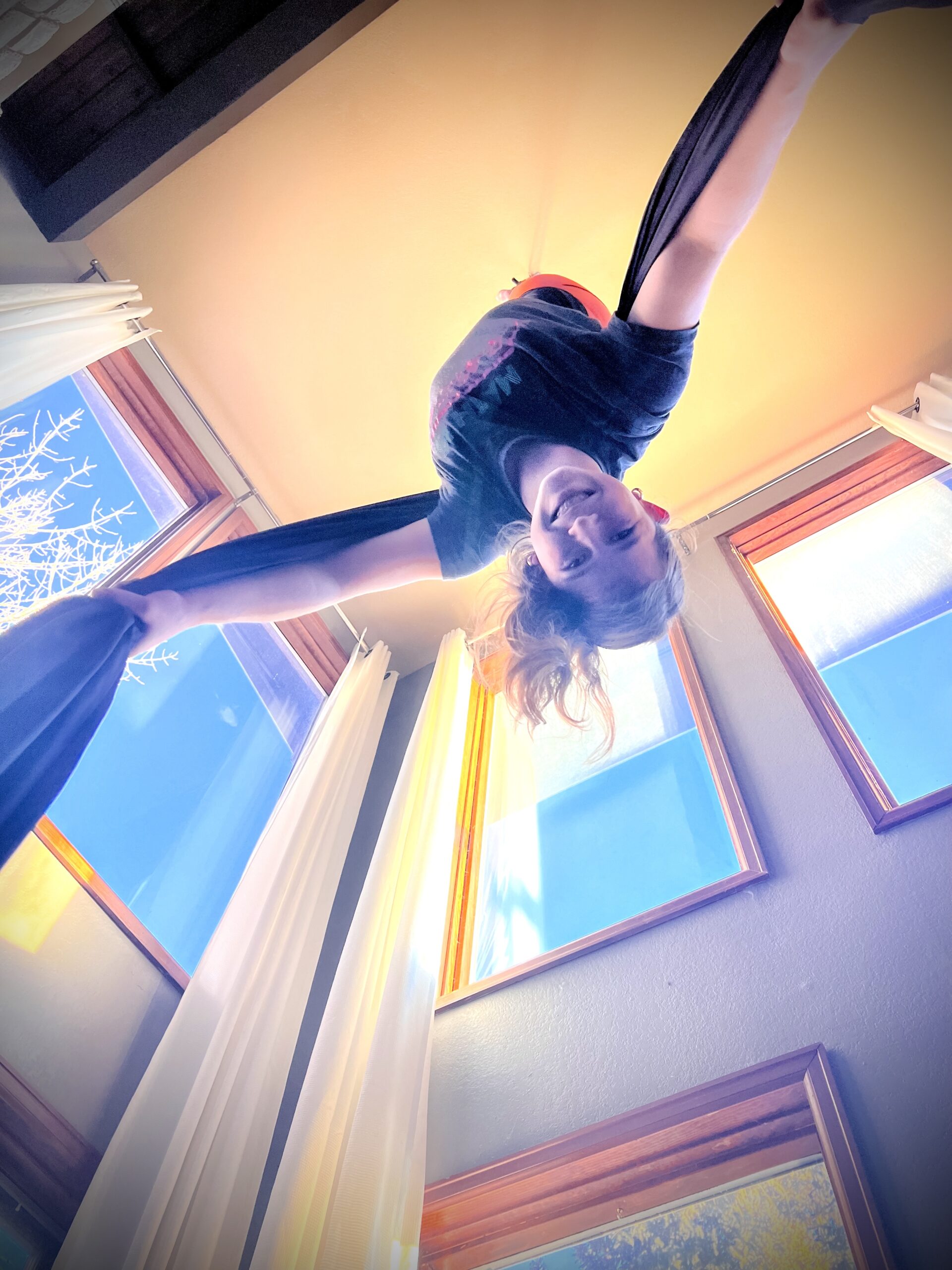
Weehawken Dance Winter Break Challenge 2025-2026 photo submission
- I’m going to practice more.
- I want to be more fit and healthy.
- I want to improve my pirouette.
- I want to be stronger on pointe.
- I want my leaps to look bigger and feel easier.
- I want to be more flexible.
I love that energy. I love a big goal.
But here’s the truth: half-effort won’t get you there.
Not because you need to be intense… but because if you’re going to practice, you want it to actually work.
Because…
Practice doesn’t make perfect. Practice makes permanent.
We’ve all heard “muscle memory.” What it really means is simple: your body learns what you repeat. The more you repeat a pattern, the more automatic it becomes—whether that pattern is clean and efficient, or messy and full of compensation.
And here’s the part nobody says out loud in January:
Your body doesn’t know the difference between “good practice” and “bad practice.”
It only knows what you repeat.
So yes—practice helps. But only if you’re practicing the right thing.
Which is why curriculum matters.
A note for parents (especially in the new year)
One quick teacher-to-parent note: please don’t force your kid to practice at home.
I know it’s tempting—especially when you’re paying for dance classes and you want them to improve. But forced practice usually turns into tension, rushed reps, and tears… and it rarely builds good technique.
Most kids don’t need more pressure. They need consistency, rest, and the right coaching at the studio. If they want to do a little extra, great—we’ll keep it short and purposeful. But if practice becomes a battle at home, it’s okay to let it go.
A really solid goal for families is this:
support the routine, not the struggle.
Get them to class. Help them sleep. Feed them well. Encourage them. Let the studio be where the technique gets installed.
Why curriculum matters (and random internet practice usually doesn’t)
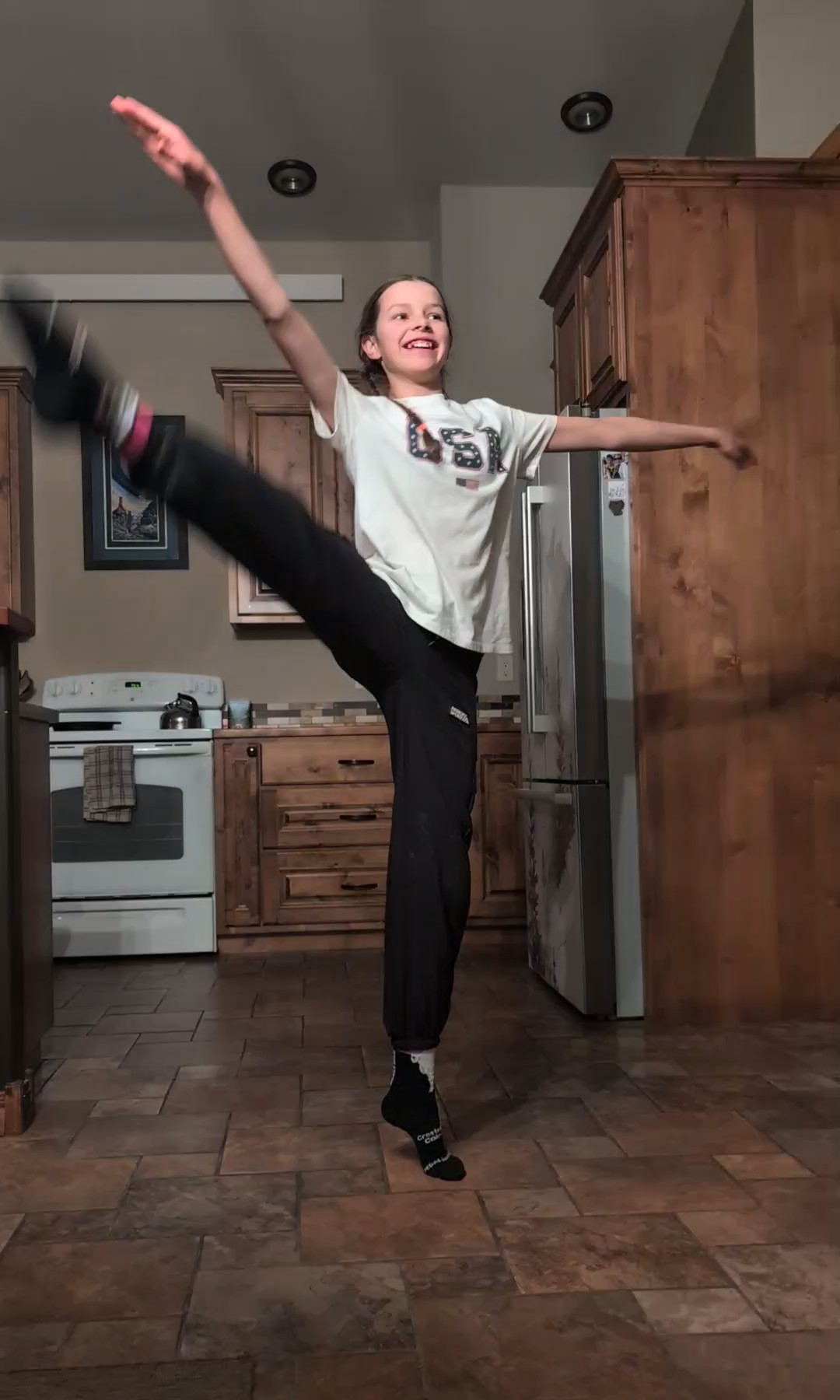
Weehawken Dance Winter Break Challenge 2025-2026 photo submission
A curriculum isn’t about being rigid. It’s about being intentional.
When students collect tips from social media—“try this drill!” “do this for your turns!”—it can feel productive… but it can also build skills on a shaky foundation. A dancer’s body can’t thrive on a highlight reel.
Real progress comes from a plan:
- what comes first
- what comes next
- and what has to be mastered before you layer on more difficulty
That’s why we anchor our teaching in established training systems and continuing education—so what happens in class isn’t a patchwork of random pieces. It’s a pathway. Students aren’t just collecting tricks; they’re building skills in an order that supports confidence, consistency, and safe technique that lasts.
And this isn’t theoretical—I’ve lived both sides of it.
That’s exactly why we use curriculum-based training here at Weehawken Dance in Montrose and Ouray County.
I was lucky—and now I understand why
When I was younger, I thought getting better was mostly about effort: work harder, practice more, improve faster.
But I was lucky. I had teachers who didn’t let me skip steps. Teachers who watched my technique closely and kept bringing me back to fundamentals—even when I wanted the flashy version. At the time, it felt like they were being picky.
Now I realize: they were giving me a gift.
Because here’s something I tell dancers (and parents) all the time:
Fundamentals don’t mean you’re being held back.
Fundamentals are the foundation.
It’s like building a house. You can decorate it all you want, but if the foundation is cracked, everything else eventually shows.
ABT changed how I teach
In 2012, I did my first American Ballet Theatre teacher training, and it completely shifted how I thought about teaching.
One of ABT’s biggest gifts to teachers is this: it trains you to start with the end goal, then build the path on purpose. In education, this is called backward design—you define what “success” looks like first, work backward to identify the prerequisites, and then teach it forward in a progression that makes the outcome realistic and repeatable.
And research-backed teaching resources consistently point to backward design as a best-practice framework because it creates alignment—your goals, your training activities, and your feedback all support the same destination. Some evidence also suggests students in backward-designed courses may outperform those in more traditionally designed courses (while more research is still needed).
What makes ABT’s National Training Curriculum especially strong is that it isn’t just “smart sequencing”—it’s built with youth development in mind. It was designed and written by Franco De Vita and Raymond Lukens in collaboration with ABT’s Artistic Advisors and a Medical Advisory Board. I was lucky to complete my ABT certifications with Franco and Raymond—from Primary through Level 7 and Partnering—during the years they were personally leading the trainings.
And what made me smile last year was hearing that same “start with the goal, build backward, teach forward” philosophy show up again in my aerial teacher training with Paper Doll Militia—because strong training, whether it’s ballet or aerial, really does follow the same rules.
And honestly? Once you learn to think this way, it changes everything. You don’t have to be a teacher to train smart—you can use this exact approach at home, too.

Weehawken Dance Winter Break Challenge 2025-2026 photo submission
Motivation matters. But structure is what creates results.
The method I come back to (for everything)
Whether we’re working on turns, pointe work, leaps, or aerial skills, this is the framework I use again and again:
Break → Build → Blend
- Break the movement into parts
- Build each part until it’s stable
- Blend it back together (slow → medium → full speed)
Because here’s the truth:
If you can’t do it slowly with control, you don’t truly own it yet.
And that’s not a judgement—it’s a roadmap.
Example: why grand jetés “don’t work” (even when dancers try really hard)
One of the reasons ABT’s approach is so effective is because it gives teachers a shared framework for what movement is—not just what it looks like.
In ABT training, we use a simple movement “map” called PERGSET—an acronym that groups dance movement into seven main categories:
- Plié (bending)
- Étendre (stretching)
- Relevé (rising)
- Glisser (gliding)
- Sauter (jumping)
- Élancer (darting/traveling)
- Tourner (turning)
Why does that matter? Because once you name what kind of movement something is, you can teach it forward.
A grand jeté lives in the world of Sauter (jumping) and Élancer (darting/traveling). It’s not just “a big leap.” It’s a traveling action that requires power, coordination, and a committed weight transfer that happens in the air.
A grand jeté usually falls apart when one ingredient is missing, like:
- strong plié (launch + landing)
- clean foot articulation from barre work (tendu/dégagé/frappé quality shows up in the air)
- power and spring off the floor (not just throwing legs)
- coordination of arms + legs
- arabesque/leg-up understanding in the landing
- committed weight transfer
If one piece is weak, the leap will show it.
That’s why we don’t just “practice the leap.” We build what creates the leap.
Technique builds the body—artistry builds the dancer
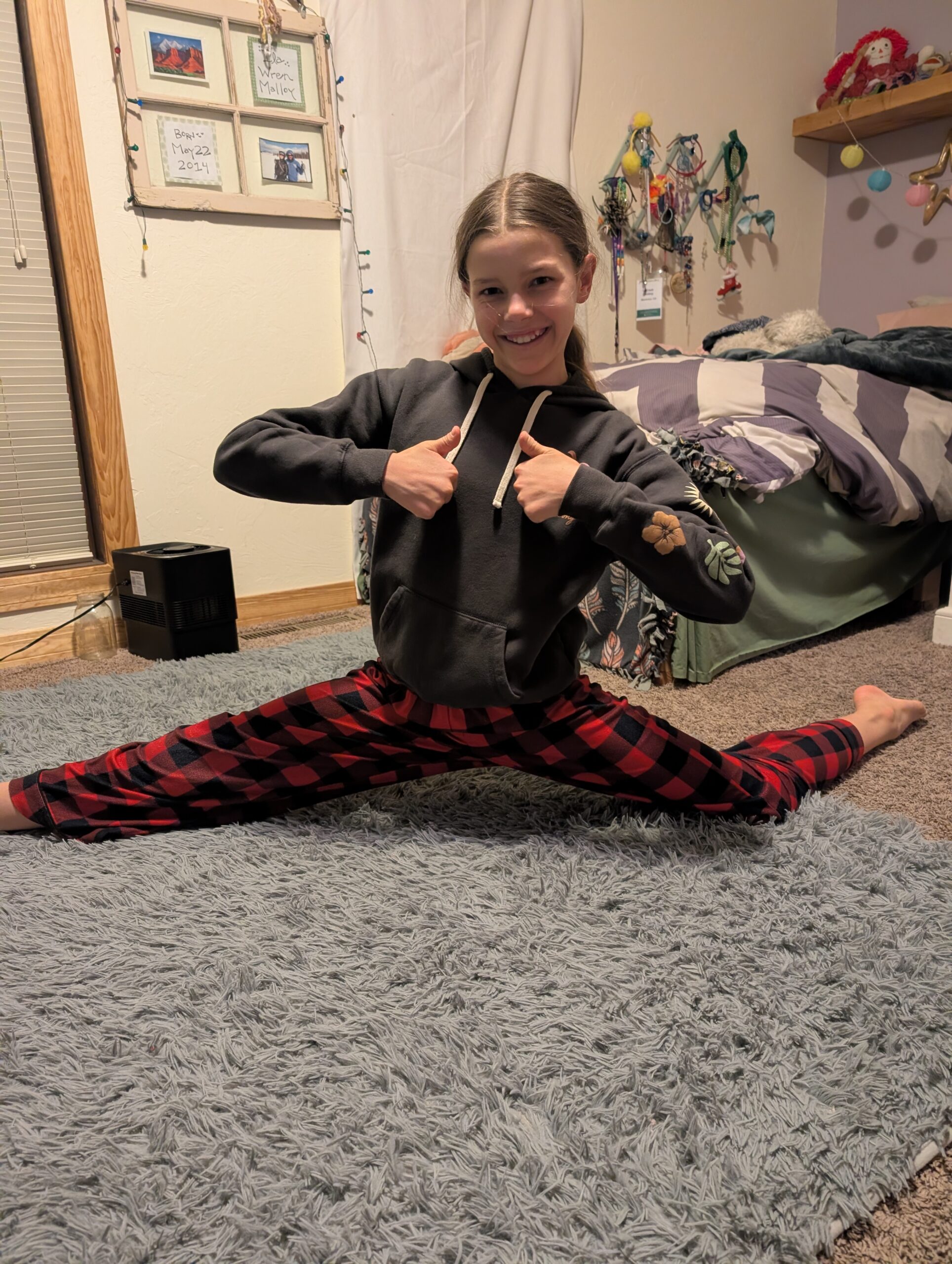
Weehawken Dance Winter Break Challenge 2025-2026 photo submission
Here’s the part I never want to lose in all this talk about curriculum and structure:
Dance is art.
It’s the beauty in the artistry—the emotion, the musicality, the control, the intention. That’s what makes a dancer an artist, not just someone who can do steps.
At Weehawken, even our aerial program is really aerial dance classes. Yes, we train skills. Yes, tricks are fun. But the goal isn’t to collect tricks like trading cards. The goal is to move with clarity and meaning—because artistry is what carries you through as a performer.
You can go to a circus and see tricks all day long.
But artistry? Artistry is different.
Artistry has emotion. It’s controlled. It’s specific. It tells a story.
And honestly—this is where “practice makes permanent” matters most:
No one remembers how high you jumped if the landing was sloppy.
No one cares how many turns you can do if they look uncontrolled.
A clean double with intention will outshine a messy triple every time.
That’s why we’re so committed to fundamentals and progression—not to make dance “strict,” but to make dancers free: free to perform, free to express, free to be powerful without being sloppy, and free to do hard things beautifully.
So… should you practice at home?
Yes—sometimes. Home practice can be incredibly helpful if you have the space and setup to do it well.
But I also want to say something clearly, because it matters (and because real life is real life):
A quick reality check: home practice isn’t always the right move (and that’s okay)
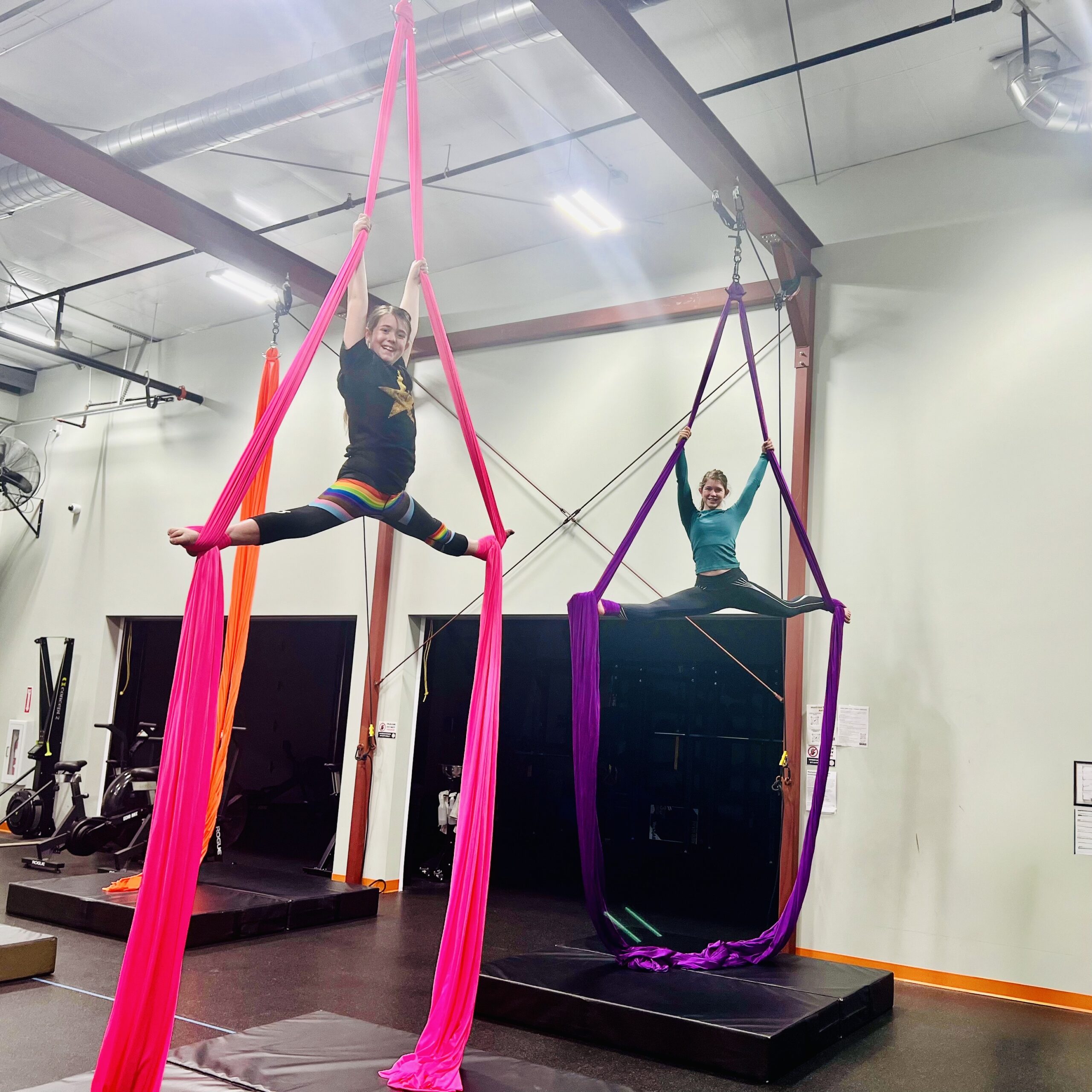
Weehawken Dance Winter Break Challenge 2025-2026 photo submission
Not everyone has:
- a safe floor (carpet that grabs, slippery tile, hard surfaces)
- enough space to travel or turn
- a way to check alignment
- a setup that supports pointe work, big jumps, or aerial skills safely
And if you don’t? You’re not behind. You’re being smart.
Because practicing a movement with compromised technique installs compromised muscle memory.
So if your home setup makes your technique worse, the better choice is to step back and train the foundations instead.
Important show-season disclaimer
I also want to be super clear: this is not me saying, “Don’t practice your show routine at home.”
Marking show choreography at home is always a good idea—because it doesn’t require a perfect floor, huge space, or “full-out” movement. It’s low-risk, high-payoff.
There’s even research showing dancers who mark can improve performance.
Here are a few ways to practice that are genuinely helpful:
- Listen to your music. A lot. (Confidence comes from familiarity.)
- Mental rehearsal: close your eyes and run the dance in your head from beginning to end.
- Visualization is a legit performance tool.
- Mark the choreography with music: go through the steps small and controlled, focusing on timing, spacing, and transitions.
- Practice performance quality while marking—your face, your intention, your confidence.
- Practice costume changes with the music playing. If the change happens to a specific cue, practice it to the exact track so the timing is identical to show week.
So yes—home “practice” can be amazing when it’s the right kind.
Marking, music familiarity, mental rehearsal, and costume-change timing are some of the best at-home tools we have.
When in doubt: conditioning.
Here’s my favorite rule as a dancer, aerialist and teacher: When in doubt—condition.
Conditioning is often more valuable than drilling the “big goal” at home, because it builds the strength, control, and endurance that make skills easier in class—where you have feedback and coaching.
And the best part? You can condition almost anywhere.
The “Break It Down, Build It Back Up” Home Practice Checklist
Weehawken Dance Winter Break Challenge 2025-2026 photo submission
How to Practice at Home (Without Building Bad Habits). Save this. Screenshot it. Use it all year.
1) Choose ONE goal
One skill, one session.
2) Choose ONE correction
Examples: tripod foot, ribs over hips, press the floor away, shoulders down and wide.
3) Build in layers
Mark → slow → smaller range → full → add speed → add context.
4) Use feedback
Video is your best friend. Watch in slow motion.
5) Use the 3-strike rule
If form breaks down three times, step back a layer.
6) Write one note
One win + one focus for next time.
A tiny conditioning menu (dance + aerial friendly)
Pick 4–6, do them 3x/week:
Dance basics
- slow relevés + eccentric calf lowers
- wall sits
- core control (dead bug / plank variations)
- glute/hip stability (bridges / clamshells)
- balance holds (passé, tripod foot awareness)
Aerial basics
- scapular strength (wall slides / scap push-ups)
- core compression drills (hollow hold progressions)
- posterior chain (bridges / hip hinges)
- active flexibility (controlled leg lifts—not yanking)
If something causes pain, numbness, pinching, or sharp pulling—stop. Challenge is normal. Sharp pain isn’t.
A simple practice challenge (7 days)
Weehawken Dance Winter Break Challenge 2025-2026 photo submission
Pick one goal (turns, pointe strength, leaps, aerial skill):
- Day 1–2: break it down + slow reps
- Day 3–4: half version + stability
- Day 5: full version at medium speed
- Day 6: add music/context
- Day 7: film one attempt, write 3 notes, celebrate progress
The real goal isn’t “perfect”
It’s a body that feels confident, consistent, and capable.
So yes—set the goal. Love the January motivation.
Just remember: the magic isn’t in “more practice.”
The magic is in better reps, built through smart progression.
And if you ever want help choosing the right progression for your dancer (or yourself)—that’s exactly what good teaching is for.
Need help choosing what to practice? Talk to your instructor or start with our parents hub.
Learn More (optional resources)
Want to learn more? Are you nerdy like me? 😄
Here are a few interesting resources if you want to go deeper:
Curriculum + Progression (the “pathway” approach)
-
ABT National Training Curriculum (overview) — why curriculum-based training matters.
-
ABT announcement of the National Training Curriculum — background + how it was designed (with artistic + medical advisors).
Why practice habits matter (motor learning + dance science)
Visualization / Mental Rehearsal
-
Dance Magazine: “Picture This: How Visualization Can Up Your Dance Game” — how mental rehearsal supports performance and confidence.
-
Dance Magazine: “3 Ways to Incorporate Visualization Into Your Dance Practice”
-
Show week wins: marking + mental rehearsal – Dance “marking” research (Warburton, 2013)
Aerial Training + Artistry Vibes
-
Paper Doll Militia workshops — structured progressions and skill breakdowns (great insight into how aerial dance is trained).